

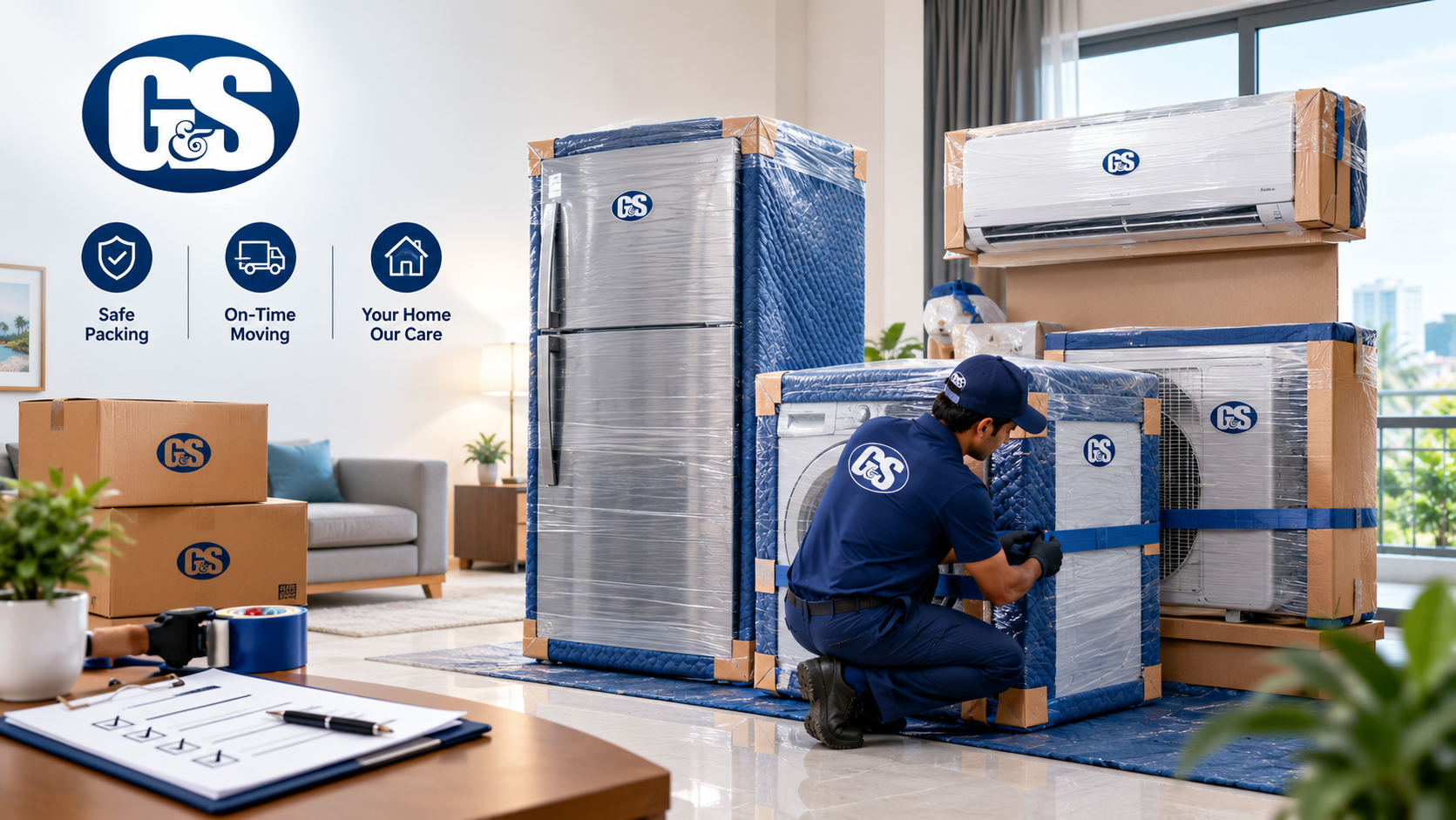
Moving home appliances takes more preparation than most families expect, and the work starts well before the movers arrive. A fridge, a washing machine and a split AC are among the heaviest and most delicate things in your home, so each one needs its own prep.
The short version: defrost and dry the fridge, drain the washing machine and lock its drum, and book a technician to disconnect the AC. Finish all three a day or two ahead, because nothing should be dripping, loose or half-dismantled when the packers walk in.
This guide covers each appliance step by step, then lists what to ask your movers.
Why Moving Home Appliances Needs Its Own Prep Plan
Most household goods survive a move with bubble wrap and a sturdy box. Appliances don’t. They hold water, refrigerant, oil and loose internal parts, so a small oversight, such as a full drain hose or an unlocked drum, can turn into a leak or a repair bill.
Kerala adds one more factor. Humidity and monsoon rain mean a damp appliance sealed inside a truck can pick up mould and a musty smell within days. For that reason, drying every appliance properly is part of the job here, not an optional extra.
Two habits help with all three appliances. First, find the manual for each model, because manufacturers differ on details like waiting times and transport position. Brand support pages such as LG India support and Samsung India support let you search manuals by model number. Second, photograph each appliance from the front, back and sides before packing, so you have a record of its condition if a question comes up later.
How to Move a Refrigerator Without Damaging It
If you’re wondering how to move a refrigerator safely, start two days ahead instead of on moving day. Then work through these steps:
- Empty it completely. Take out the food, shelves, drawers and ice trays. Eat or give away perishables early, since a truck ride in Kerala heat is no place for them.
- Unplug and defrost. Switch it off at least a day before the move, or as long as your manual recommends. Lay towels at the base to catch meltwater and leave the doors open.
- Clean and dry the inside. Wipe every surface, then let the cabinet air-dry fully. A fridge shut up while damp will smell by the time it reaches the new home.
- Secure the loose parts. Tape or strap the shelves and drawers in place, or wrap them separately. Tie the power cord against the body, and use tape or a strap to keep the doors shut, with a soft pad under the tape so it doesn’t pull off the paint.
- Keep it upright. A fridge travels best standing up. If a narrow staircase or lift forces the movers to tilt it, ask them to keep the angle small and the time short, because compressor oil can move when the unit leans.
Washing Machine Shifting: Drain, Dry and Lock the Drum
Washing machine shifting looks simple until the drum swings loose inside the cabinet during the drive. A few steps prevent that.
First, run a final drain or spin cycle on an empty drum, then close the water tap and disconnect the inlet and drain hoses. Let both hoses empty into a bucket. Next, pull out the detergent drawer and clear the filter if your model has an accessible one, with a towel ready for the water that comes out.
Drying matters just as much. Wipe the drum, door seal and drawer cavity, and leave the door open for a few hours so no moisture stays trapped.
Finally, fit the transit bolts. These are the metal bolts that lock the drum to the cabinet so it can’t swing in transit, and most front-loading machines ship with them. Your manual shows where they go. Top-loaders often use a different transport lock or none at all, so check before you assume. Once that is done, tie the hoses and power cable against the back panel, tape the door or lid shut, and keep the machine standing upright.
AC Uninstallation Before Moving: Book the Technician Early
AC uninstallation before moving is the one job you shouldn’t try yourself. A split AC has an indoor unit, an outdoor unit and copper piping filled with refrigerant, and a careless disconnection can lose gas or damage the compressor.
Book a qualified technician, either through the brand’s service centre or a local AC service provider, two or three days ahead. Book the reinstallation at your new home at the same time, and check your warranty terms, since some brands expect authorised technicians to handle installation.
On the day, the technician usually collects the refrigerant into the outdoor unit, a step called pump-down. After that, the pipes and wiring come off and the pipe ends are capped. Your part is simpler:
- Switch the AC off at the mains the night before.
- Clear the space around both units so the technician can work safely.
- Remove the batteries from the remote and keep it with your documents.
- Label each unit and its bracket with the room name, so refitting is quick.
During transport, both units should stay upright with the pipes coiled and capped.
Packing Appliances for Moving: What to Ask Your Movers
Packing appliances for moving goes best when you settle expectations before booking, not on the day. G&S Packers and Movers offers custom packing, so you can choose partial or full packing and raise your appliances when you discuss the plan.
These questions give you a clear picture of who does what:
| Question to ask | Why it matters |
|---|---|
| Will your team pack the fridge, washer and AC units, or do I prepare them? | It sets what you finish before the packers arrive. |
| Do you arrange AC removal and refitting, or should I book a technician? | Technician work is often separate from transport. |
| What padding and strapping do you use on appliances? | Appliances need cushioning and straps, not just a wrap. |
| Will the appliances travel upright and secured? | Fridges and washers handle tilting and shifting poorly. |
| Is each appliance’s condition recorded at pickup? | The record should match your own photos. |
| Is the quote final, with no extra mileage or fuel charges? | Surprise charges are easier to settle before the move. |
G&S is IBA-approved and Indian Navy-approved, with more than 5,000 moves completed across Kerala, and documentation is part of every move. Whichever company you hire, ask for the quote and the paperwork in writing. If you’re shifting within the city, our household packers and movers in Kochi service is the place to start. For longer moves, see our relocation services.
Moving Home Appliances on the Day: Final Checks and Setup
On the morning of the move, walk through each appliance once more. Check that the fridge doors are taped and the inside is dry. Confirm the washing machine bolts are in and the hoses are tied back. Make sure the AC units are disconnected and labelled.
Then tell the supervisor which items are fragile and which must stay upright. Keep the manuals, remote and small parts like bolts, shelves and brackets in one labelled bag that travels with you instead of in the truck.
At the new home, set the fridge upright and let it settle before switching it on. Level the washing machine and remove the transit bolts before the first wash, then store them for the next move. Finally, call the AC technician for installation. Check each appliance for dents or leaks against your earlier photos, and report any problem to the movers right away.
Moving Home Appliances in Kochi: Your Next Step
Appliances need their own plan, and starting early gives you the most room for error. Defrost and dry, lock and secure, and bring in a technician for the AC. Then confirm with your movers exactly who handles what.
If you’re shifting in or around Kochi, request a free quote from the packers and movers in Kochi team at G&S. Tell them which appliances are coming along and ask what the team handles. You can also message the team on WhatsApp at +91 98958 46659.
Frequently Asked Questions About Moving Home Appliances
How long should I wait before switching on the fridge at the new home?
Let it stand upright and settle first, because compressor oil needs time to drain back after the journey. If the fridge travelled tilted or on its side, it needs longer. Your manual gives the right waiting time for your model, so follow that over any general rule.
What if I lost my washing machine’s transit bolts?
Contact the brand’s service centre and ask for replacements before moving day. Don’t improvise with wedges or padding inside the drum, since the bolts are designed for your model.
Can the movers uninstall my split AC?
It depends on the company. Some arrange removal and refitting, while others only transport the units. Ask before booking, and if it isn’t included in the quote, book a separate technician.
Can a refrigerator travel lying on its side?
Upright is safest, and most manuals say so. Tight stairwells and apartment lifts sometimes force a brief tilt, though, so ask your movers to limit it. Check your manual for any advice on which side is acceptable.
What is the safest way of moving home appliances in a monsoon?
Dry each appliance fully, and only then cover it, because wrapping a damp unit traps moisture. Pick a dry window for the move if you can. Also ask your movers how appliances are covered during the walk between the door and the truck, since that is where rain gets in.
Do appliances need insurance during a move?
Ask your mover what its paperwork covers for goods in transit, and read it before you sign. Your appliance warranty and any home insurance may have separate terms. Photos taken before the move make any claim easier to explain.